Even the most seasoned digital marketer knows that there is always something new to learn to keep up with the latest technology. Digital marketing trends evolve over time, driven by technology that catapults carefully designed strategies.
One of the most recent changes to digital marketing is the availability of AI tools. AI use is becoming more prevalent, from chat boxes to virtual assistants, and there is no clear end in sight.
It’s safe to say that AI tools are pretty much everywhere and here to stay.
“AI Takeover” – That’s Not What’s Happening, But Let’s Talk About It
It doesn’t matter where you work or what media you consume; the conversation about AI is everywhere. ChatGPT, Copilot, and Gemini are among the most popular tools available.
AI is more than just a chat box that tells you how badly you goofed on your vegetable garden this year. It is quickly becoming part of consumers’ everyday lives, from learning a new recipe to shopping and research — AI tools are clearly here to stay.
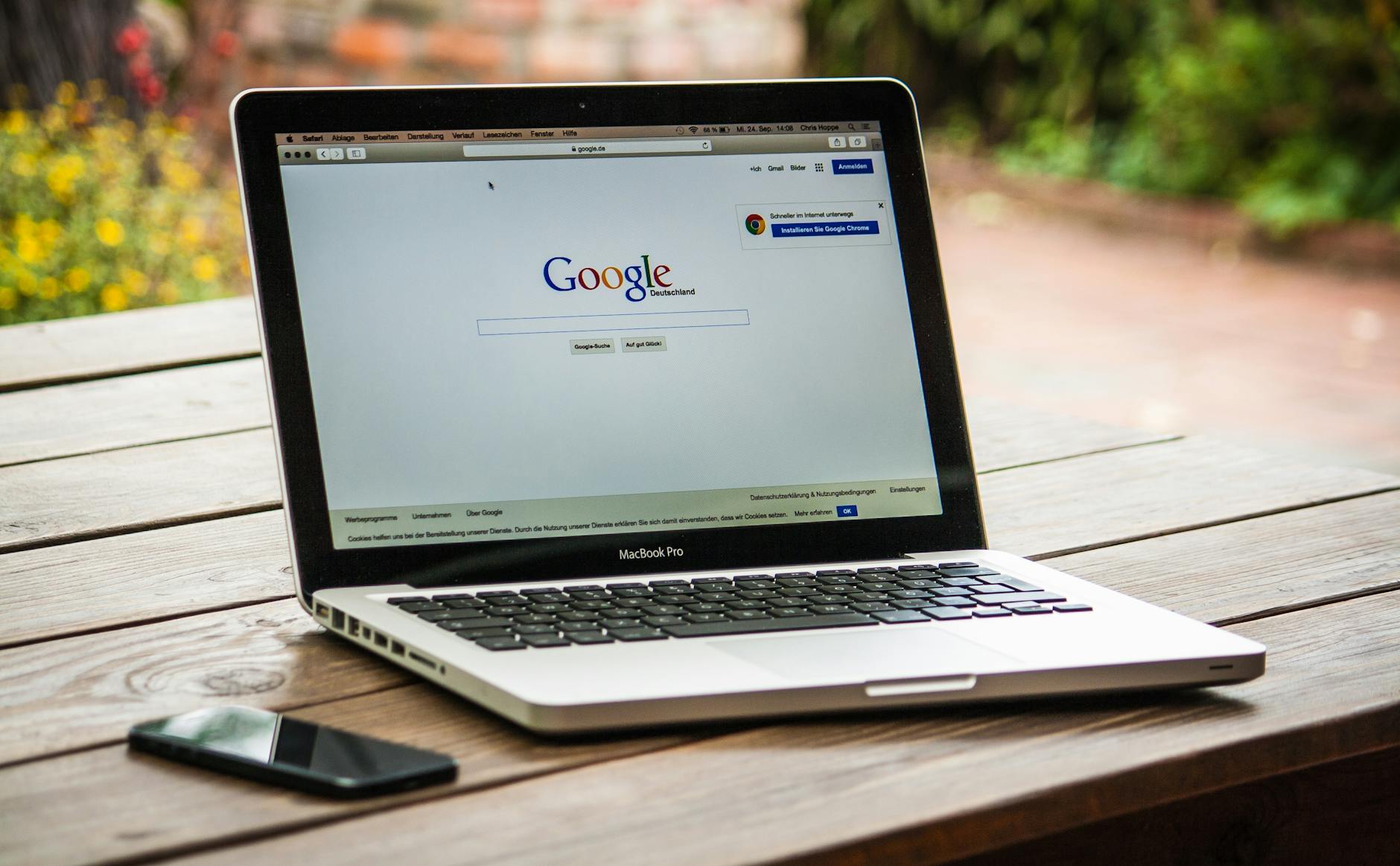
Consumers can find AI tools literally everywhere, often disguised as a typical technological advancement. One of the most impactful examples of this is the AI Overview summary feature on the Google search engine (yes, like I said, they’re not always a chat box).
In a relatively recent update, Google introduced the “AI Overview” feature, which scans top results and comes up with a summary (or solution) to inquiries. This tool has proven useful to its users because it promotes solutions quickly with minimal effort and less time than scanning websites for an answer. In essence, the AI Overview tool completes Ctrl+F for you.
So, not only can Google deliver results in literal seconds, but now it can provide a summary of your question without the need to click on any link or consume additional content. Yikes.
The fact that Googlers (is that what they’re called?) can find answers without even the scroll of a mouse means that the future of SEO, ads, and digital marketing is in for a world of change. AI tools like this one are creating new challenges in achieving website traffic goals, impactful SEO, and even the visibility of ads on your website. It is changing how we target our audiences, how we use the tools we have on hand, and what we need to do to continue ranking well and getting our products or services in front of our target audiences.
Okay, that Sounds a Bit Dramatic. How Can Customers Then Find Our Website?
Since the .com boom, website traffic has been critical to the operation of any business. Even when a company has a brick-and-mortar presence, it is expected to maintain an equally functioning online presence. Website traffic is critical to determining customer journeys and, most importantly, driving conversions.
So, how can marketers defend their online spaces? Despite the potentially damaging effects of AI Overview, marketers should still focus on traditional SEO to get their customers to their website. There are different avenues to get someone to your website that are outside of a traditional Google search. Maintaining an online business profile involves linking your website, utilizing social media platforms, engaging in print advertising, and leveraging influencer marketing. In addition, companies should continue to push SEO-marketing initiatives like publishing informative and relatable blogs, thought website content, and social media ads to draw in audiences.
UX designers and content writers should still incorporate both short-tail and long-tail keywords on their webpages to help improve their website’s ranking on search engines. The reasoning behind that is that Google takes the top websites to find the answer that customers entered into the search query before providing a summary. It also provides citations to its findings, which means it’s likely a customer will click and arrive directly at your site. If your content isn’t high-ranking, it’s possible that the answer needed to resolve the customer’s question won’t be found on your site.
Introducing Generative Engine Optimization (GEO)
This new approach to digital marketing aims to optimize content for visibility in AI-powered search engines and produce effective responses using generative AI. The goal is to ensure that content is properly cited in generative AI models.
Unlike SEO, which employs traditional strategies, GEO’s goal is to optimize content so that it is used to answer search inquiries above all else. Success metrics for this strategy are measured by appearances in AI platforms, rather than SERPs (search engine results pages), which are used to measure the success of SEO strategies.
Traditional SEO Still Works! But Start Using AI to Help You with Your Marketing Strategies
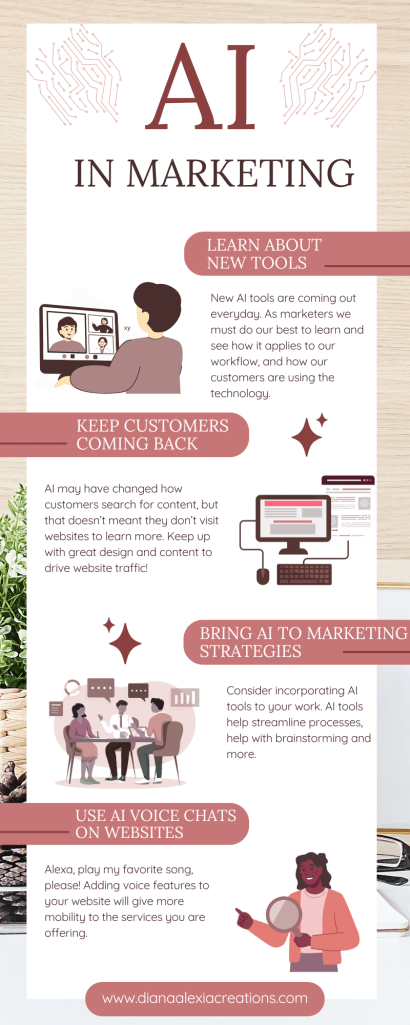
As digital marketers, it is our responsibility to ensure that our products or services reach our target audience, even when we face challenges and changes, such as the introduction of AI tools. Our objective shouldn’t be to avoid them or speak ill of them, but instead, we should incorporate them into our work and processes.
AI is a great tool for checking spelling and grammar errors. Tools like Grammarly help writers everywhere streamline their writing so that their content is at its best. Tools like this help marketers stay on brand and ensure that their content is clear and flows seamlessly throughout. It is also great for switching out words that may be too complex, making your material easier to read.
Like Grammarly, ChatGPT, and its competitors can help with structure, grammar, spelling, and more. In fact, it can be used to help you outline content, go through topic ideas, and understand research (although please always double-check this information). Now, AI does not replace human talent, but it does provide insights that one might be overlooking.
Even outside of content, AI tools can benefit in other ways we use digital marketing. Web developers may use the tool to identify website issues or optimize the layout and content of what they already have. AI helps curate HTML or CSS that quickly helps troubleshoot spacing and other similar issues.
If someone is planning a website layout (hi, UI designer!) AI tools can be useful for better laying out the customer journey and identifying various methods that can be tested to optimize the buyer’s navigation process. If anything, marketers need to learn how to become better prompters and use AI tools strategically to receive support and answers quickly.
AI tools do not–and should not– do the work for you, but they should be used as a tool to help make work processing simpler and move things down the pipeline that much faster.
In other words: Use AI as a Tool, Not a Crutch.
Don’t Forget About AI Transcripts and Voice Chats
Do you enjoy listening to your voicemails? Yeah, we don’t either. iPhone has released a Live Voicemail feature with its iOS 17 update, which includes a transcription capability placed right in your inbox. Now, when you receive a voicemail, you don’t even have to bother listening to it. That is another form of AI, but this is not the one we want to highlight here.
Voice-enabled devices and tools are in demand. Both Google Home and Amazon Alexa systems have dominated the market, changing how people search. They may verbally ask Alexa for a recipe to make the best pancakes because they forgot how much baking powder to use. Rather than typing it out (which, to be fair, helps when your hands are covered in batter), they can get a quick response just by using their voice and simple commands.
Even on iPhones, keyboards are coming with a voice capability. The reason is so that people can speed up how they search by getting straight to the point.
Not only is this changing how users interact with search engines, but it is also telling marketers that they need to think carefully about their long-tail keywords when creating content (for websites, blogs, newsletters, and social media). Consumers might no longer be searching for Disney tickets, but they might now search for “Alexa, how much are Disney Animal Kingdom tickets?”
The sooner we get customers in front of the content they need, the faster they receive their answer and likely the sooner they will follow through with a purchase or reach out for services.
Need Help with Content Writing? Reach Out to Diana Alexia Creations
As much as we wish it were true, AI cannot solve everything. That’s why working with a trusted digital marketing agency (like Diana Alexia Creations) still works. Whether you need help with social media captions, Canva graphics, branding, or writing your blog, Diana Alexia Creations is here to assist.
Reach out to us today to learn more about how our services can meet your company’s needs.
Interested in receiving our newsletter? Join our mailing list and be the first to receive marketing tips, service changes, promotions, and more!

 Stephanie Ann Digital Marketing | SEO-Focused Content, Email & Website Support
You must be logged in to post a comment.